Digital TV Antenna

Choosing the Right Digital TV Antenna

The right digital TV antenna depends on where the property is, not on what was on the roof before. Three things decide it: which band your local transmitter broadcasts on, how far away that transmitter is, and what sits between it and the antenna.

A site close to a transmission tower with a clear line of sight usually needs only a compact metropolitan antenna. Further out, or where hills, buildings and trees block the path, a higher-gain antenna with more elements captures a weaker signal more reliably. Bigger is not always better, though. An oversized antenna in a strong signal area adds cost and wind load without improving the picture.

Rather than guessing, enter the installation address into our Antenna Finder. It uses ACMA transmitter data and terrain between the site and the tower to recommend an antenna, then shows the direction to point it.

VHF, UHF and Combination Antennas

Australian free-to-air television is broadcast on two bands, and your antenna has to match the one used in your area.

  • VHF antennas receive channels 6 to 12. Most capital city main transmitters broadcast on VHF.
  • UHF antennas receive channels 28 to 51. Many regional transmitters and local infill translators use UHF.
  • Combination antennas receive both bands. They suit areas served by more than one transmitter, or installers who want one antenna that covers most jobs.

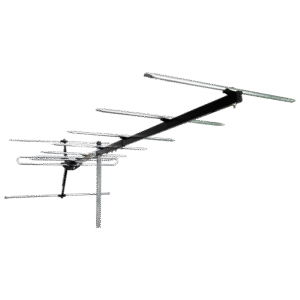
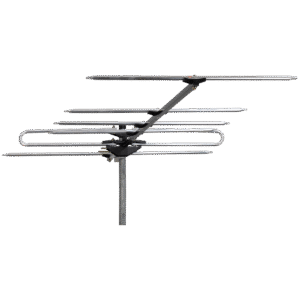
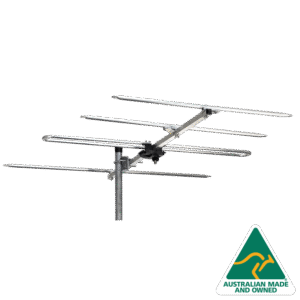
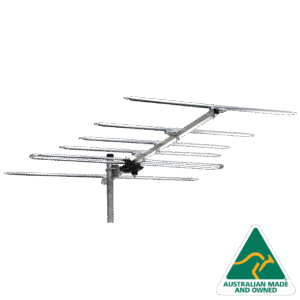
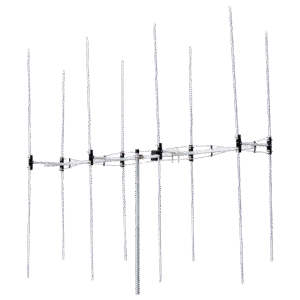
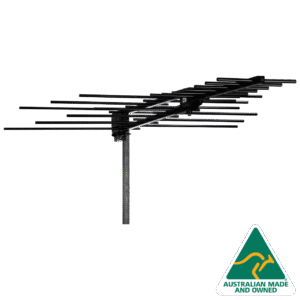
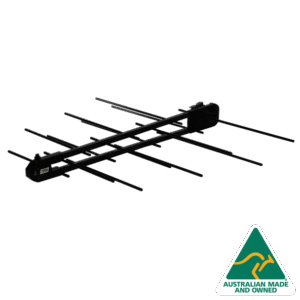
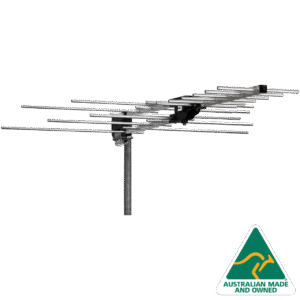
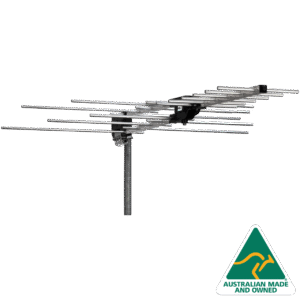
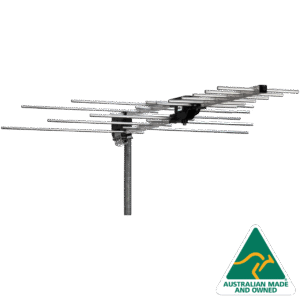
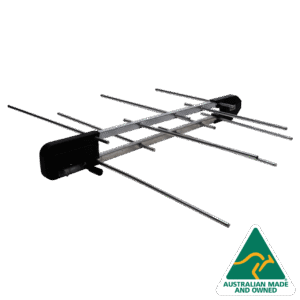
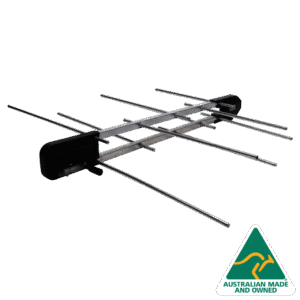
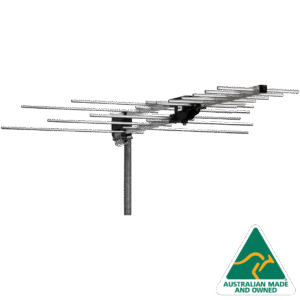
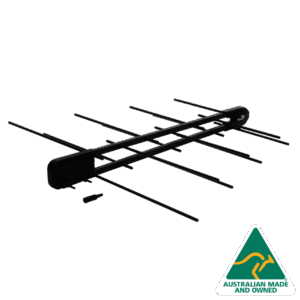
Within each band you will find Yagi, log periodic and phased array designs. Yagi antennas are directional and come in a range of element counts, from 4 element metropolitan models up to 18 element outer metropolitan and fringe models. Log periodic antennas are compact and suit strong signal areas. Phased arrays are a common choice for UHF fringe reception.

Many antennas in the range include 4G/5G filtering. These reject mobile network signals that can otherwise cause pixelation and dropouts, which makes them worth choosing for any site near a mobile tower.

Planning the Rest of the System

An antenna is only one part of a reliable installation. Every splitter and every metre of cable reduces the signal that reaches the TV, so plan the whole run before you order.

  • Multiple TVs: one antenna can feed several outlets using the correct splitters and taps.
  • Long cable runs: use quality coaxial cable and replace old or damaged cable rather than reusing it.
  • Signal loss: a masthead or distribution unit from our amplifiers and modulators range can make up for losses across long runs and multiple outlets.
  • Mounting: masts, brackets and roof mounts are in installation hardware.

An amplifier is not a substitute for the correct antenna. It boosts whatever the antenna receives, including noise, so start with an antenna suited to the site and add amplification only where the system needs it. Choose “complete system” in the Antenna Finder and it will build the full parts list for you, including cable, splitters and outlets.

Antennas for Residential and Commercial Projects

iSupply Electrical supplies digital TV antennas for single homes, apartment buildings, hospitality venues, schools, aged care facilities and commercial fit-outs. Trade packs are available on selected models for installers who fit the same antenna regularly.

For larger buildings with many outlets, the antenna usually feeds a distribution system rather than individual TVs, so allow for future expansion when you choose gain and amplification. If you need help specifying a job, call us on (02) 9760 2565 or get in touch.

Frequently Asked Questions

How do I choose the best digital TV antenna for my location?

It depends on the band your local transmitter uses, your distance from it and any obstructions in between. The quickest way to check is to enter your address into the Antenna Finder, which recommends an antenna for that exact site.

Do I need a VHF, UHF or combination antenna?

Match the antenna to your transmitter. Most capital city main transmitters use VHF, while many regional transmitters and local translators use UHF. If your area is served by both, choose a combination antenna.

What is the difference between metropolitan, outer metropolitan and fringe antennas?

They are built for different signal strengths. Metropolitan antennas have fewer elements and suit strong signal areas. Outer metropolitan and fringe antennas have more elements and higher gain to capture weaker signals from further away.

Which way should I point my antenna?

Directly at the transmitter that serves your area, with the elements mounted to match its polarisation (horizontal or vertical). The Antenna Finder shows the transmitter direction, distance and polarisation for your address.

Do I need an amplifier with my antenna?

Not always. Amplifiers are used where long cable runs or multiple televisions cause signal loss, but they should not replace proper antenna selection.

Can one antenna connect to multiple televisions?

Yes. With the correct splitters and distribution equipment, a single antenna can supply multiple televisions throughout a property.

What does a 4G or 5G filter do?

It blocks mobile network signals that sit close to the TV broadcast band. Without filtering, a nearby mobile tower can cause pixelation and dropouts even when the TV signal itself is strong.

Will a digital TV antenna work with my existing television?

Most modern televisions with a built-in digital tuner work with any compatible digital TV antenna. Older televisions may need a set top box.

Can I use my existing coaxial cable with a new antenna?

In many cases, yes. However, damaged or ageing cable affects signal quality and may need replacing to get the best result from a new antenna.

What causes digital television signal dropouts?

Common causes are weak reception, an antenna pointed the wrong way, damaged cabling or connectors, obstructions such as trees and buildings, mobile network interference and too many splits without amplification.

Showing 17–32 of 92 results

We can help

Need this product?

Tell us how many you need and we will help with availability, lead times, or suitable alternatives.

    Product you're enquiring about